🌊 Aral Sea Tours: A Journey to One of the World’s Most Unique Landscapes
🌊 Aral Sea: From Inland Sea to Desert Wonder - A Travel Story for Explorers
Introduction
The Aral Sea is one of the most remarkable destinations in Central Asia—not only for its unusual landscapes, but also for the powerful story it tells. Located between Uzbekistan and Kazakhstan, the Aral Sea has transformed from a vast inland lake into a striking desert environment within just a few decades.
For travelers, this region offers a rare combination of adventure tourism, cultural discovery, and historical insight, making it a unique addition to any Central Asia itinerary.
📍 Geographic and Historical Background
The Aral Sea was once the fourth-largest inland lake in the world, covering approximately 68,000 square kilometers in the 1960s. It was fed by two major rivers: the Amu Darya and the Syr Darya, which carried water from distant mountain ranges across the region.
During this period, the Aral Sea supported:
-
A thriving fishing industry producing over 40,000 tons of fish annually.
-
Dozens of lakeside settlements and ports.
-
Rich biodiversity with numerous fish and bird species.
The town of Moynaq was once a major fishing hub, located directly on the shoreline.

⚠️ The Environmental Transformation
Beginning in the 1960s, large-scale irrigation projects during the Soviet era diverted water from the Amu Darya and Syr Darya rivers to support cotton agriculture in arid regions.
As a result:
-
The inflow of water to the Aral Sea drastically decreased.
-
Water levels began to fall rapidly.
-
By the 1980s, the sea started splitting into separate basins.
-
By the 2000s, much of the original sea had disappeared.
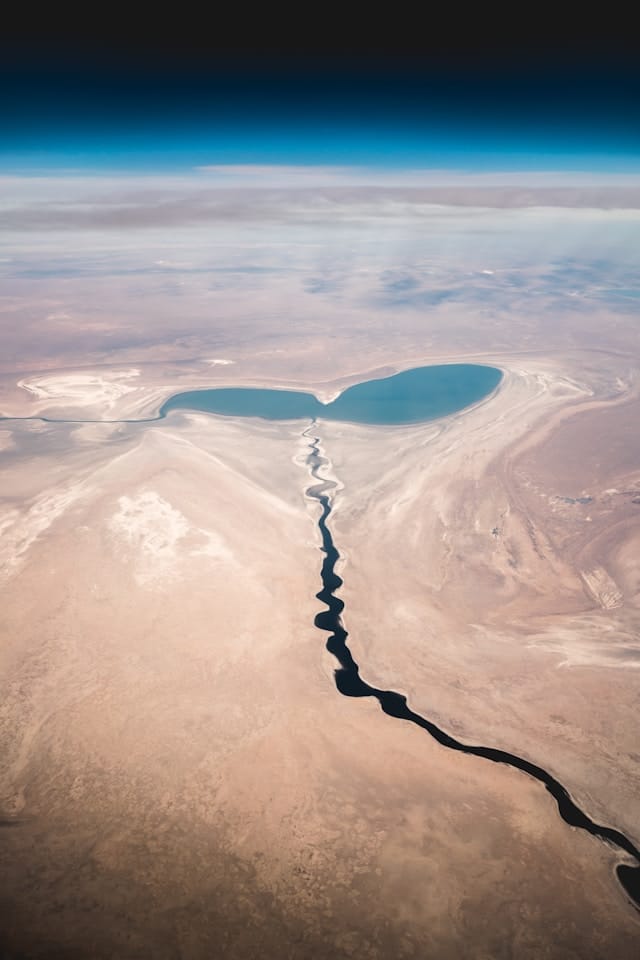
Today, only small portions of the Aral Sea remain, while the former seabed has turned into the Aralkum Desert—one of the newest
deserts on Earth.

🌵 A New Landscape: The Aralkum Desert
The disappearance of water has revealed an entirely new landscape. The Aralkum Desert now stretches across thousands of square kilometers, characterized by:
-
Salt-covered plains.
-
Sand dunes and dry seabed patterns.
-
Sparse vegetation adapted to harsh conditions.
This transformation has created a rare natural phenomenon—a place where visitors can literally walk on what used to be the bottom of a sea.
🚢 Moynaq: The Ship Graveyard
One of the most iconic and visited locations in the region is the former port town of Moynaq. Today, Moynaq lies far from the water and is known for its ship cemetery, where abandoned fishing vessels rest on dry land. These rusting ships have become powerful symbols of the Aral Sea’s transformation.
Visitors can also explore:
-
The local museum showcasing photographs and history.
-
Memorials dedicated to the region’s past.
-
Panoramic viewpoints of the former shoreline.
🏜 The Ustyurt Plateau and Surroundings
The nearby Ustyurt Plateau offers dramatic natural scenery, with steep cliffs overlooking the former sea basin. This area is ideal for:
-
Photography and panoramic views.
-
Sunrise and sunset experiences.
-
Exploring remote and untouched landscapes.
The plateau also adds geological diversity to the Aral Sea region, making tours more visually dynamic.

👥 Cultural and Human Impact
The shrinking of the Aral Sea has deeply affected local communities. The fishing industry collapsed, and many residents lost their primary source of income. Despite these challenges, local communities continue to preserve their traditions and welcome visitors, offering a chance for meaningful cultural exchange and perspective on human resilience.
🚙 Aral Sea as a Travel Destination
Today, the Aral Sea region has become an emerging destination for eco-tourism and adventure travel. Typical tours include:
-
4x4 expeditions across desert terrain.
-
Visits to Moynaq and historical sites.
-
Overnight stays in traditional yurt camps.
-
Exploration of remote natural landscapes.
🌟 Conclusion
The Aral Sea stands as a unique destination where history, nature, and human experience come together. From the silent ship graveyards of Moynaq to the vast emptiness of the Aralkum Desert, every part of this journey tells a story. For travelers seeking something beyond traditional tourism, the Aral Sea offers an unforgettable experience—one that is both visually stunning and deeply meaningful.